Summer Cooling System Tips From a Home Inspector in Maryland
With summer right around the corner, now is a good time to give your cooling system a little attention before the hottest days of the year arrive.
Not every home has a cooling system, and in some cases that is normal depending on the age and design of the house.
While a home inspection is not the same as an HVAC service, there are several visible conditions that can provide clues about a system’s condition. The goal of a home inspection is to identify visible conditions that may indicate a need for maintenance or further evaluation, not to diagnose or repair HVAC systems.
What a Home Inspector Looks For in a Cooling System
During a home inspection, I focus on visible and accessible components of the cooling system, such as:
Proper clearance around the outdoor condenser unit
Condition of refrigerant line insulation
Sealing where refrigerant lines enter the home
Temperature of refrigerant lines during operation
Visible signs of wear, damage, or neglect
The outdoor condenser should have adequate clearance and be free of vegetation, debris, and other obstructions that can restrict airflow. I also look for the outdoor electrical disconnect (shut-off switch) located near the condenser unit. This switch should be properly installed and accessible, as it allows the system to be safely shut off during servicing or emergencies.
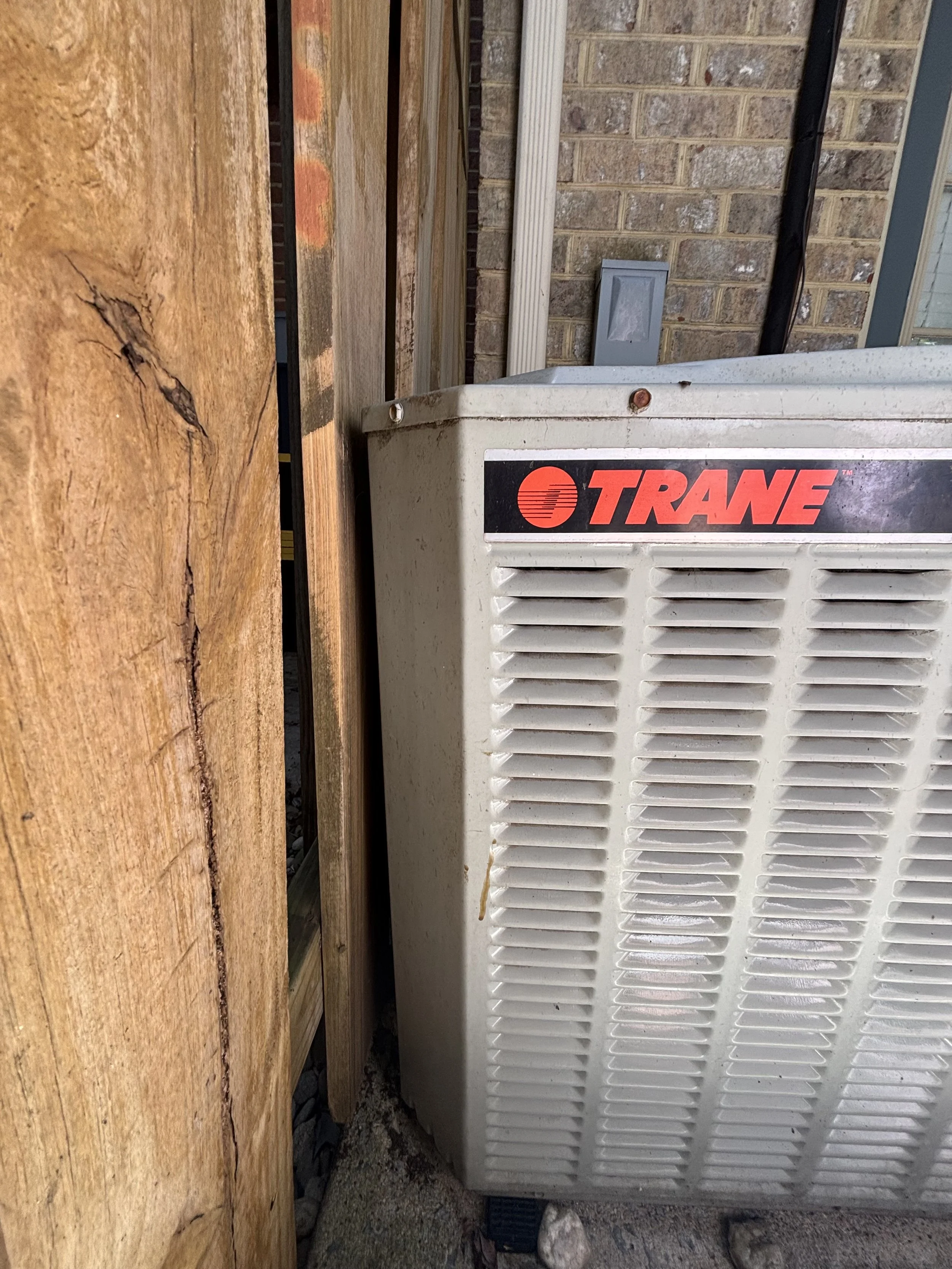
This condenser unit is located too close to a fence, which can limit airflow and affect cooling performance.
Inside the home, I also check the evaporator area where accessible, including the condensate drain and drip line. This helps confirm that moisture is being properly managed and that there are no visible signs of backup or leakage.
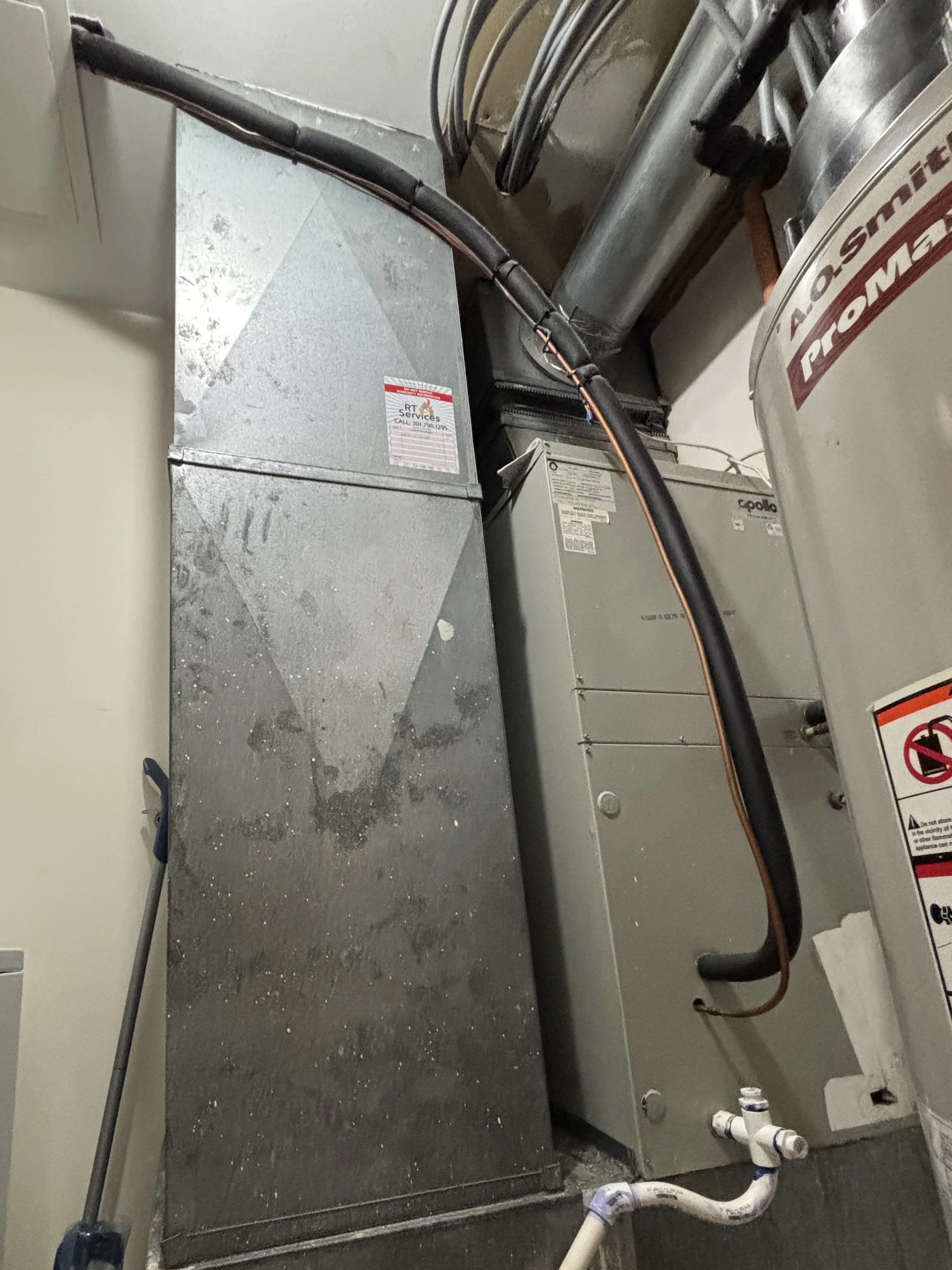
Interior air handler unit with refrigerant lines entering from ceiling, visible condensate drain line and clean-out, and insulation appearing intact.
Damaged or missing insulation on refrigerant lines can reduce efficiency, and unsealed openings can allow moisture, pests, and outside air to enter the home.
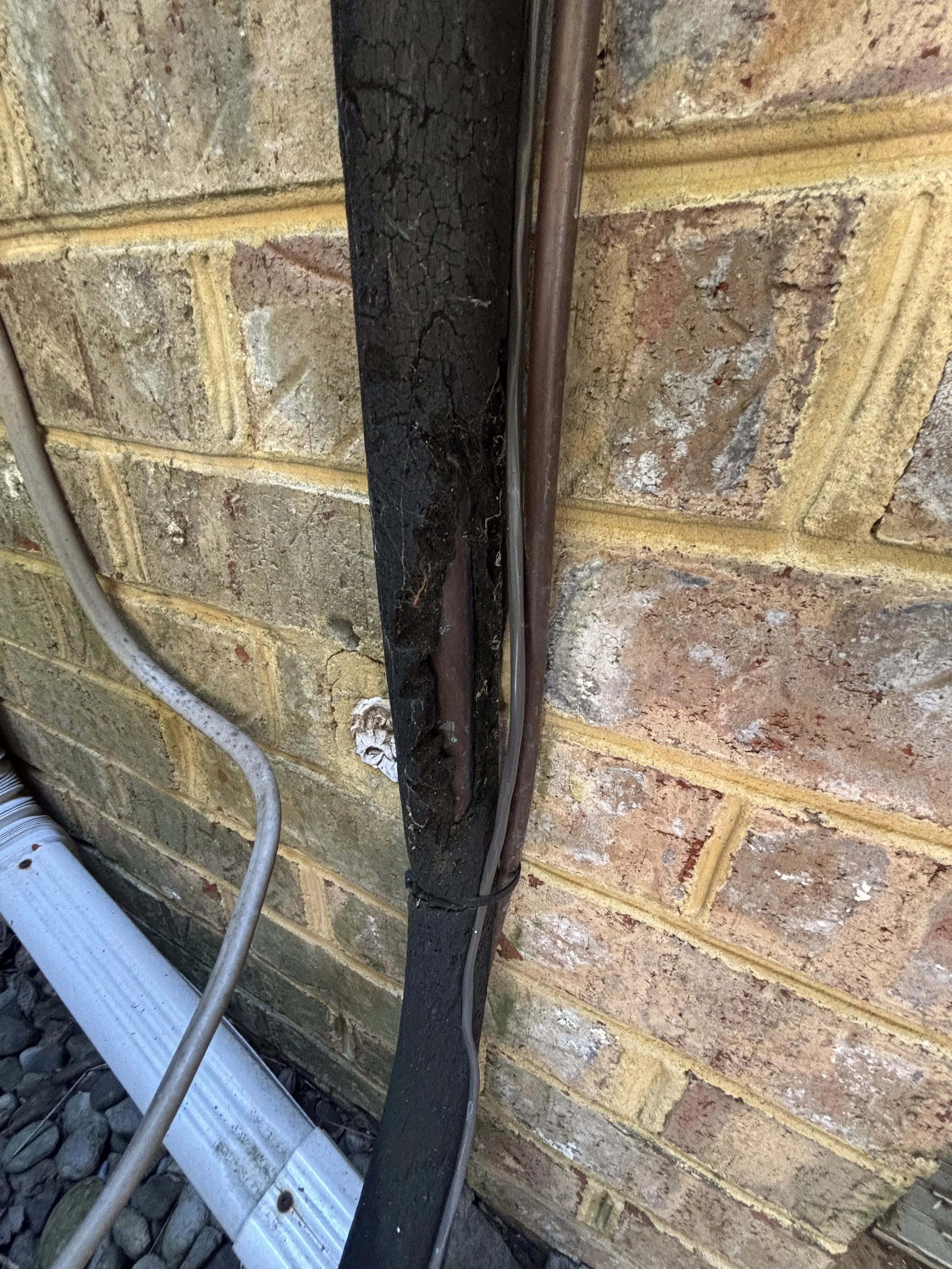
Damaged insulation on exterior refrigerant line set at condenser.
Central Systems vs Window Units
Built-in central cooling systems are evaluated during inspection, while window units are generally considered personal property and are not part of the inspection.
Simple Maintenance That Makes a Difference
Many cooling system issues are preventable with routine maintenance. Homeowners can help their system perform better by:
Replacing air filters regularly
Keeping the outdoor condenser unit clear
Addressing small issues early
Scheduling HVAC servicing when needed
Why Cooling System Condition Matters
Whether you’re buying a home or simply maintaining one, understanding the basic condition of your cooling system can help prevent unexpected problems during peak summer temperatures.
