What Your Hagerstown Brick Bond says.
Bricks, Bricks, Bricks!
Are you thinking of taking a walk through Hagerstown's historic downtown area? Do you often drive by the agricultural homes of Washington County? Next time, take a peek at the brickwork. Those bricks are not stacked randomly, and usually there is a method to the madness.
Before the modern day wood and drywall framing took over the building industry, the older structure may have relied on solid masonry walls. These walls were made up of multiple layers of bricks, referred to as "wythes", to support the weight of the building. Now, you cannot just go laying bricks any which way. Brick masons would (and in some cases still do ) use strategic layout patterns called bonds. The bricks that are often found in these buildings are laid in such a way that they essentially provide a "lock" to help prevent the structure from being compromised.
Whether you are a homeowner, architectural enthusiast, or prospective buyer, understanding brick patterns can help make informed decisions and can help you ask the right question.
Before I dive into what makes up different brick bonds, I want to point out , if you aren't already aware, what exactly a "stretcher" and "header" is.
A header is a brick laid so its short, square end faces out. A stretcher is a brick laid so that it's long side faces out. Traditionally, the header bricks will span across two layers of wythes, interlocking them together for structural support.
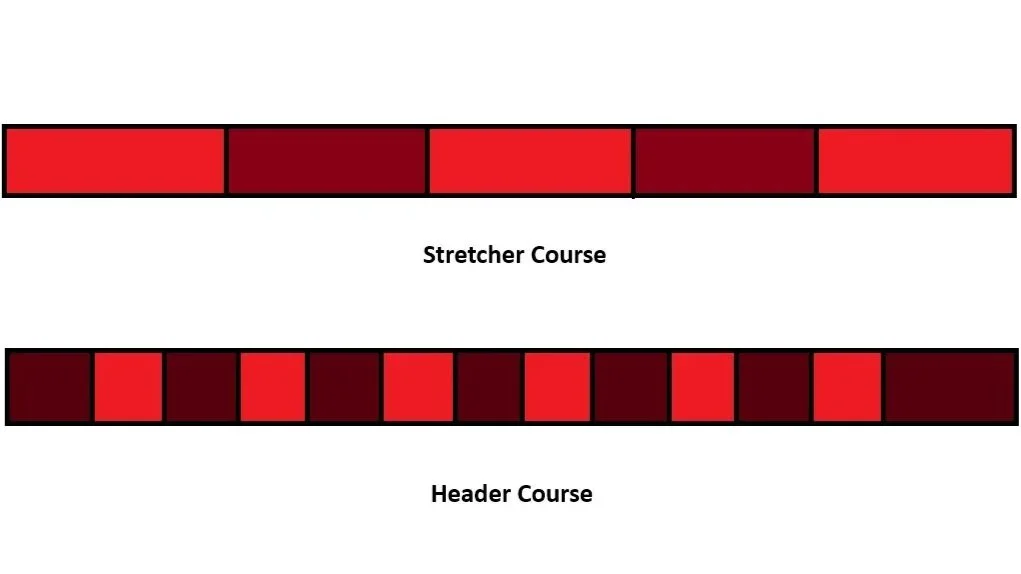
A stretcher and header course.
Flemish Bond: The Colonial Status Symbol
One of my favorite buildings that show beautiful bricks bond is the old post office building, which is now a really fun plant themed bar. According to historical documents found on the Maryland Historical Trust website, this building is composed of the Flemish brick bond, with a version of the Basket Weave bond found in the tympanum.
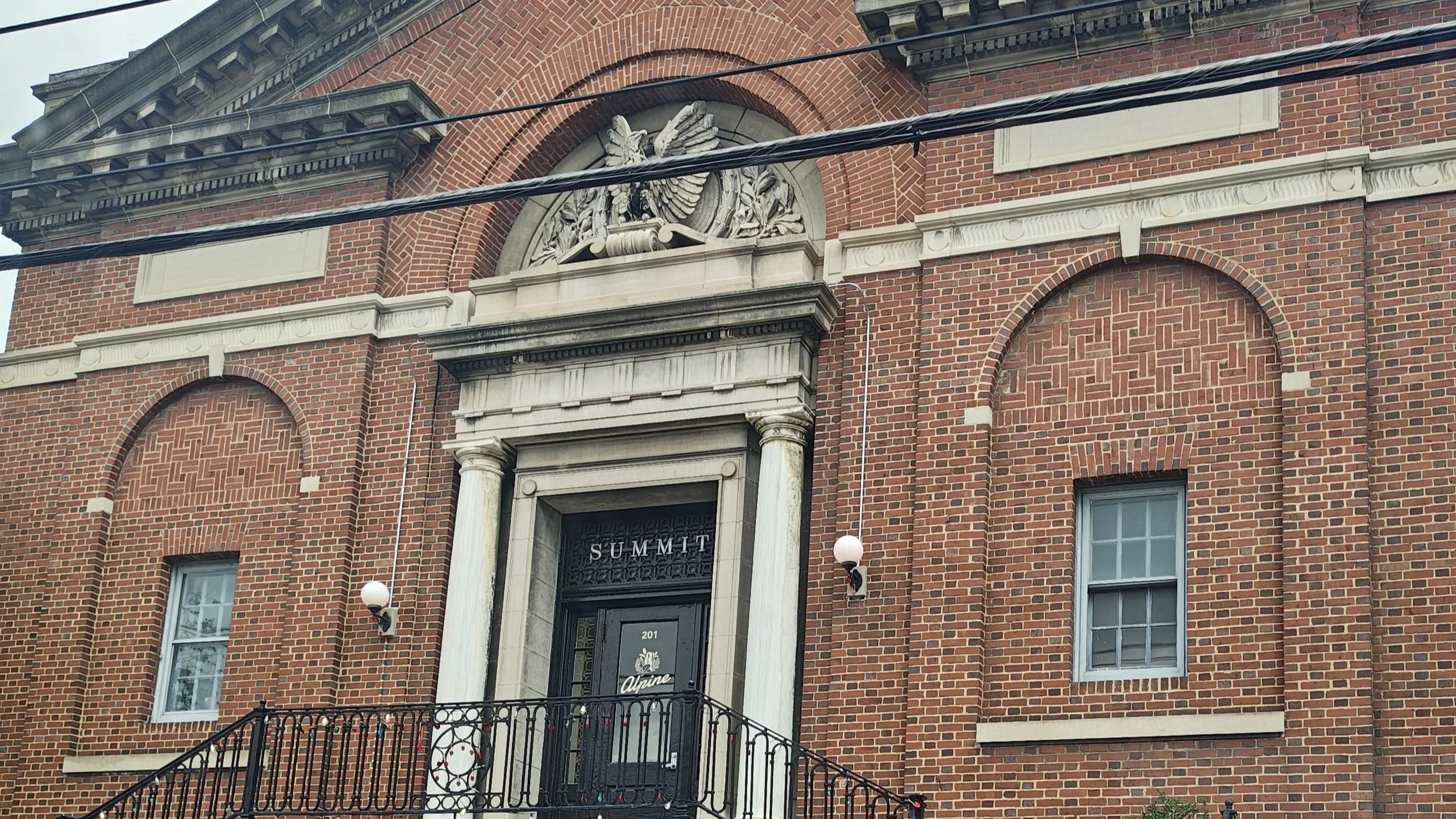
101 Summit Avenue in Hagerstown, Maryland
How to Identify it:
A Flemish bond switches between one stretcher and one header in every single horizontal course (row). Each of these headers are placed, usually, with the glazed side facing outwards. Each header is plumb and centered below and above each of the stretchers.
A Status Symbol.
The Institute of Classical Architecture & Art historians note that the Flemish Bond was often seen as a major status symbol in the region. During the early days of Maryland, it was not uncommon for wealthy homeowners to spend a little extra money to lay Flemish Bond on the facades facing the street. They then used cheaper patterns on the sides and rears. You can find this strategy on the official Maryland Historical Trust National Register records for Antietam Hall. The front shows of a pristine Flemish Bond, and the rear transitions into the English garden wall bond.
***Please note that this is a private residence located in a neighborhood. Kindly respect all property boundaries***
The English Bond: Structural Powerhouse
In an essay written by Calder Loth, he notes that this particular bond dates as far back as the Middle Ages. Due to its structural durability, early English settlers then continued using this brick bond throughout America. I recently noticed it on a building on Potomac Street.
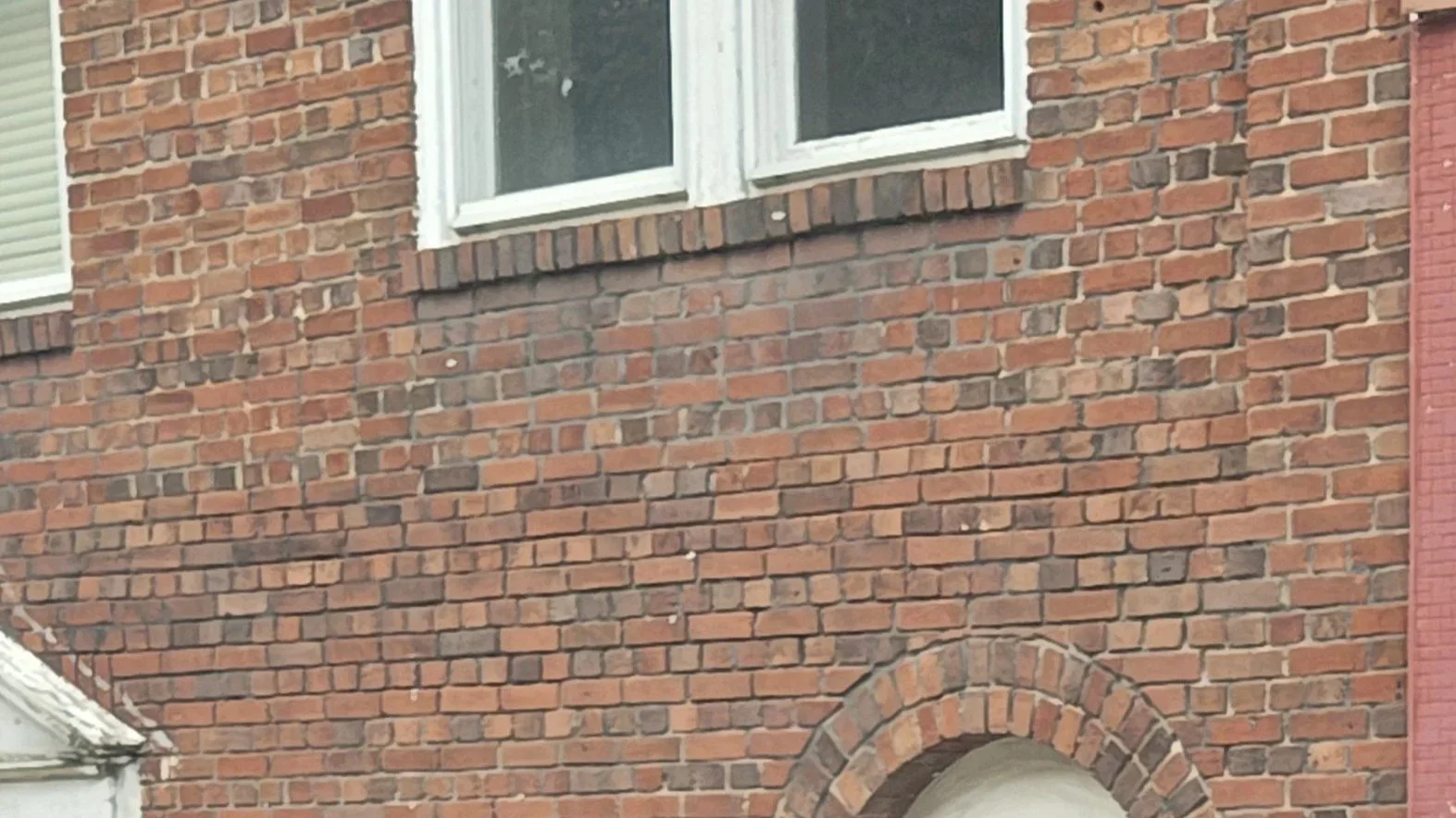
An image of English brick bond found on a building in Hagerstown, Maryland.
How to Identify it:
In my opinion, the English bond is one of the easiest brick bonds to recognize. It consists of rows that alternate between headers and stretchers. One of the rows will have been laid of all stretchers. The next will be laid with all headers. This repeats the entire way up the wall.
The Fizzle.
As other brick works became more appealing, the English bond slowly faded. Masonry work like Flemish bonds and ultimately American brick bonds out favored the English bond.
The Common (American) Bond: The 19th-Century Shift
During the early 19th century, Hagerstown saw rapid expansion. Colonial masonry became time consuming. This is where the American brick bond played a big factor in saving time. This brick bond is also referred to as the "Common" bond. According to Historic Preservation sites, this bond popped up as a 3 course common bond. By the 1800s it had replaced English bond.

Common Brick Bond.
How to Identify it:
This brick bond is not a necessarily one size fits all bond. It can be found in three-course, five-course, six-course, and seven course, Between each section of stretchers, you will find a row of headers separating them.
20th Century Changes.
The Construction Specifier mention that at the turn of the 20th century, The American bond bore witness to its own obsolescence. A new invention popped up, factory made wire cut brick. New steel frame and concrete structural systems made the need for structural brick less necessary. Masons shifted to using brick veneer walls that rely on metal ties, removing the need for structural wythes. This bond can be referred to as the running brick bond
What a Home Inspector Looks For
When inspecting a historic property in Washington County, mapping the brick bonds isn’t just a fancy way to show off brick bond knowledge, it is a critical part of evaluating the structure
Delamination: Broken internal headers from foundation settling allow the outer layer of brick to bow outward and peel away from the structural core.
Infilled Window Openings: Closed-off openings usually disrupt the surrounding bond pattern. The resulting seams often concentrate stress, leading to localized cracking and water entry along the former opening perimeter.
Incompatible Repointing: Modern Portland cement applied to pre-1880 walls locks in moisture, crushing softer historic brick during freeze cycles and causing severe spalling. Always verify that past repairs used traditional lime mortar
Verified Sources & References:
Loth, Calder. "Flemish Bond: A Hallmark of Traditional Architecture." The Institute of Classical Architecture & Art (ICAA). https://www.classicist.org/articles/flemish-bond-a-hallmark-of-traditional-architecture/
Loth, Calder. "English Bond and its Kin." The Institute of Classical Architecture & Art (ICAA). https://www.classicist.org/articles/classical-comments-english-bond-and-its-kin/
Historical Trust. "National Register of Historic Places: Antietam Hall (WA-I-065)." State of Maryland Division of Historical and Cultural Programs.
Preservation Articles. "Evaluating Brick Bonds to Help Date Historic Structures." Historic Preservation Archives. https://historic-preservation.weebly.com/preservation-articles/evaluating-brick-bonds-to-help-date-historic-structures
The Craftsman Blog & LimeWorks Labs."Lime Mortar vs Portland Cement in Historic Preservation." Technical data on material permeability and spalling risks in pre-1880 structures.
DiDomizio, Danielle, Amarantha Quintana-Morales, and Matthew Normandeau. "From Mass Masonry to Veneer: The Evolution of Cavity Wall Design." The Construction Specifier. https://www.constructionspecifier.com/from-mass-masonry-to-veneer-the-evolution-of-cavity-wall-design/
