Attic Inspection Guide: Structural and Ventilation Components Explained
What’s happening in an attic?
An attic is a critical part of a home’s structural and thermal system. It contains multiple interconnected components that work together to support the roof, regulate airflow, and maintain energy efficiency. A clear understanding of these components provides insight into how the attic functions as a system.
Roof Trusses
Roof trusses are engineered structural assemblies designed to support the roof load and transfer those loads to the exterior walls. In many residential structures, including townhouses, a modified queen truss design may be utilized. This type of system incorporates additional members or layout variations to accommodate design requirements while maintaining structural stability.
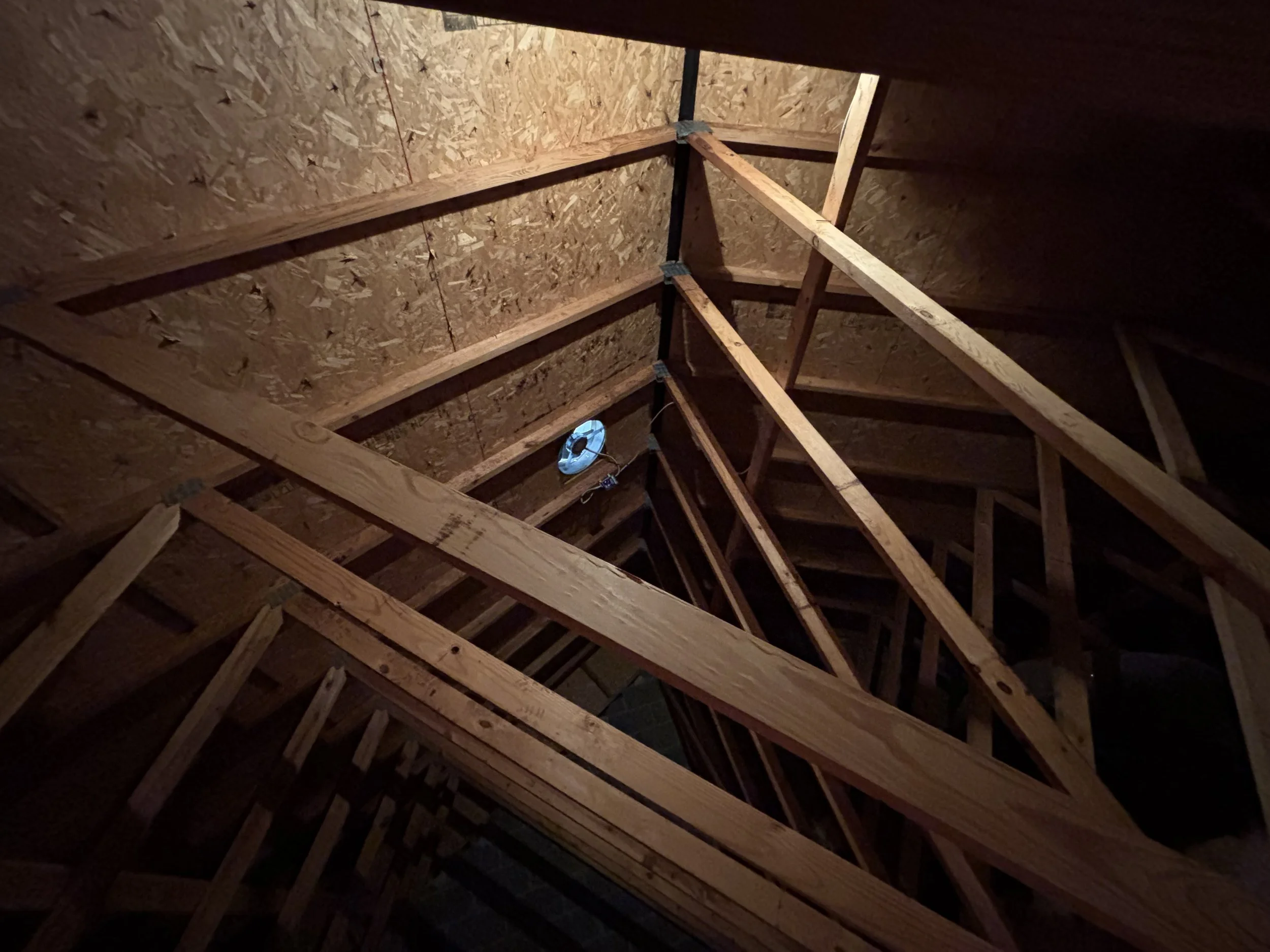
Wood truss members.
Gusset Plates (Truss Connector Plates)
Gusset plates, commonly referred to as truss plates, are metal connectors used to join the individual wood members of a truss. These plates are pressed into the wood at designated connection points during manufacturing to ensure the truss functions as a single engineered unit.
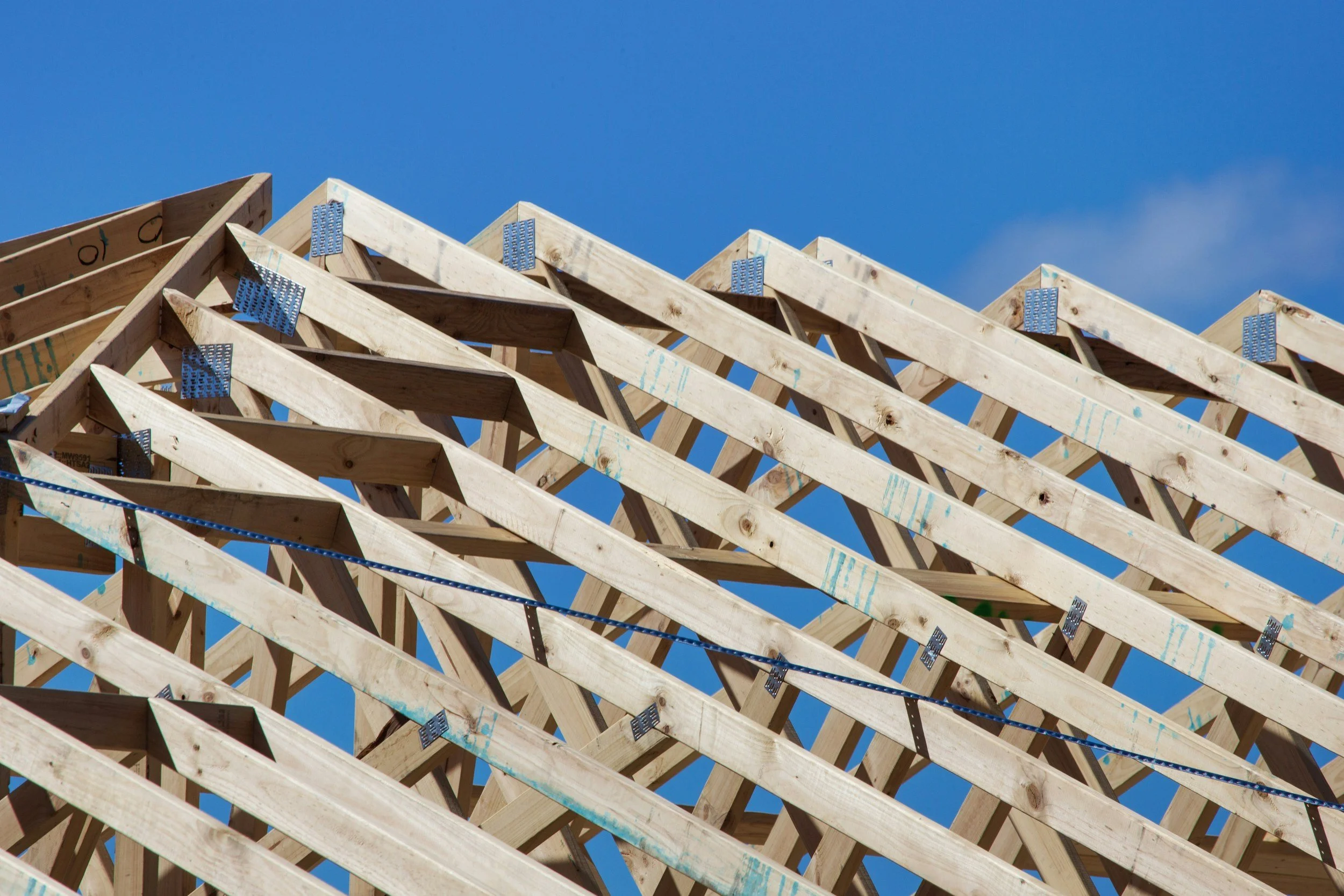
Truss members attached together by gusset plates.
Blown-In Fiberglass Insulation
Blown-in fiberglass insulation is a loose-fill material commonly installed in attic spaces to improve thermal resistance. It is composed of fine fiberglass fibers that trap air, reducing heat transfer between the conditioned living space and the attic.
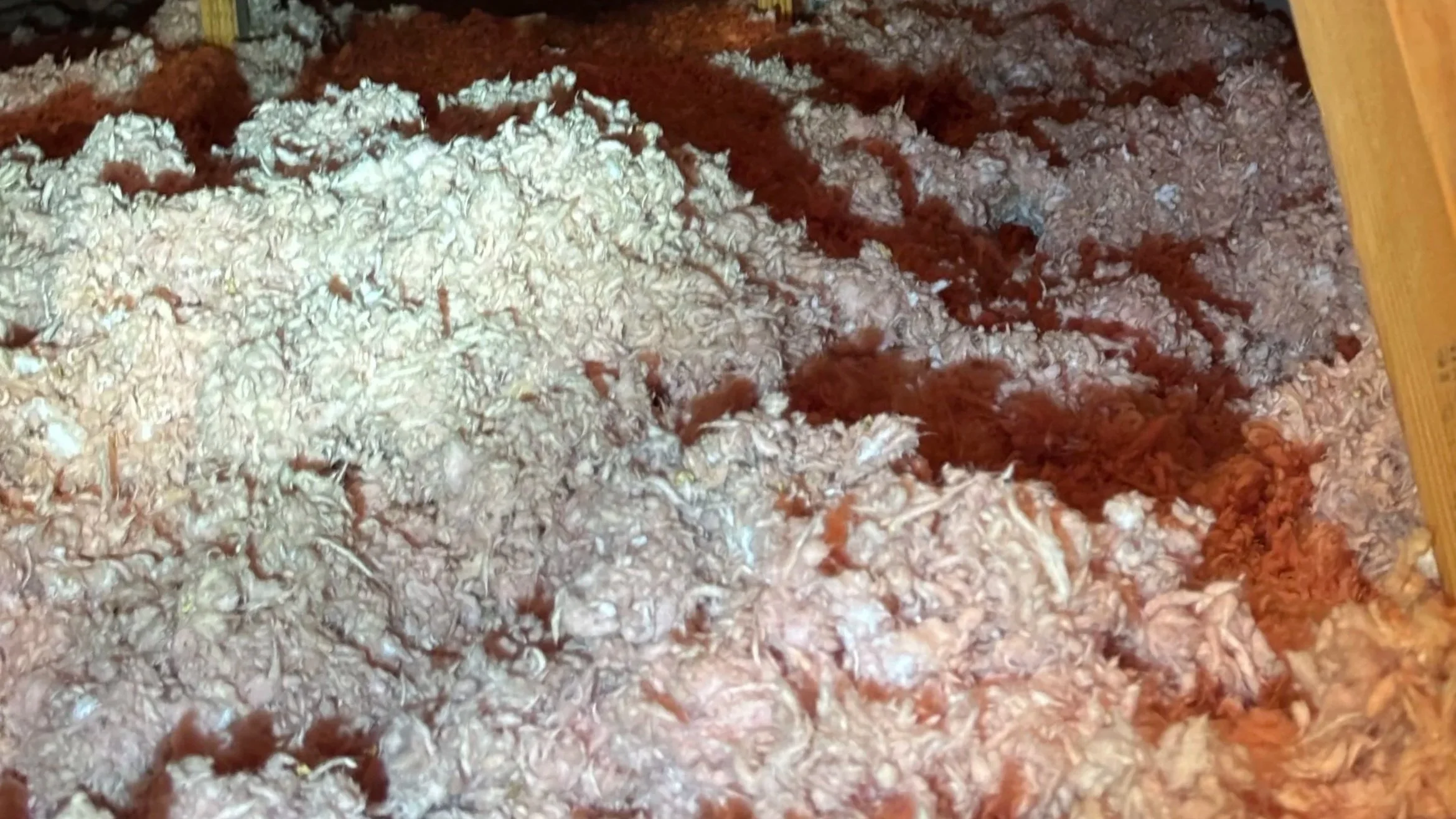
Blown in fiberglass insulation.
Ventilation Baffles (Rafter Vents)
Ventilation baffles are installed in the eaves of the attic to maintain a clear pathway for airflow from the soffit vents into the attic space. These components help ensure that ventilation air can move freely from the lower portions of the roof assembly toward the upper attic space.
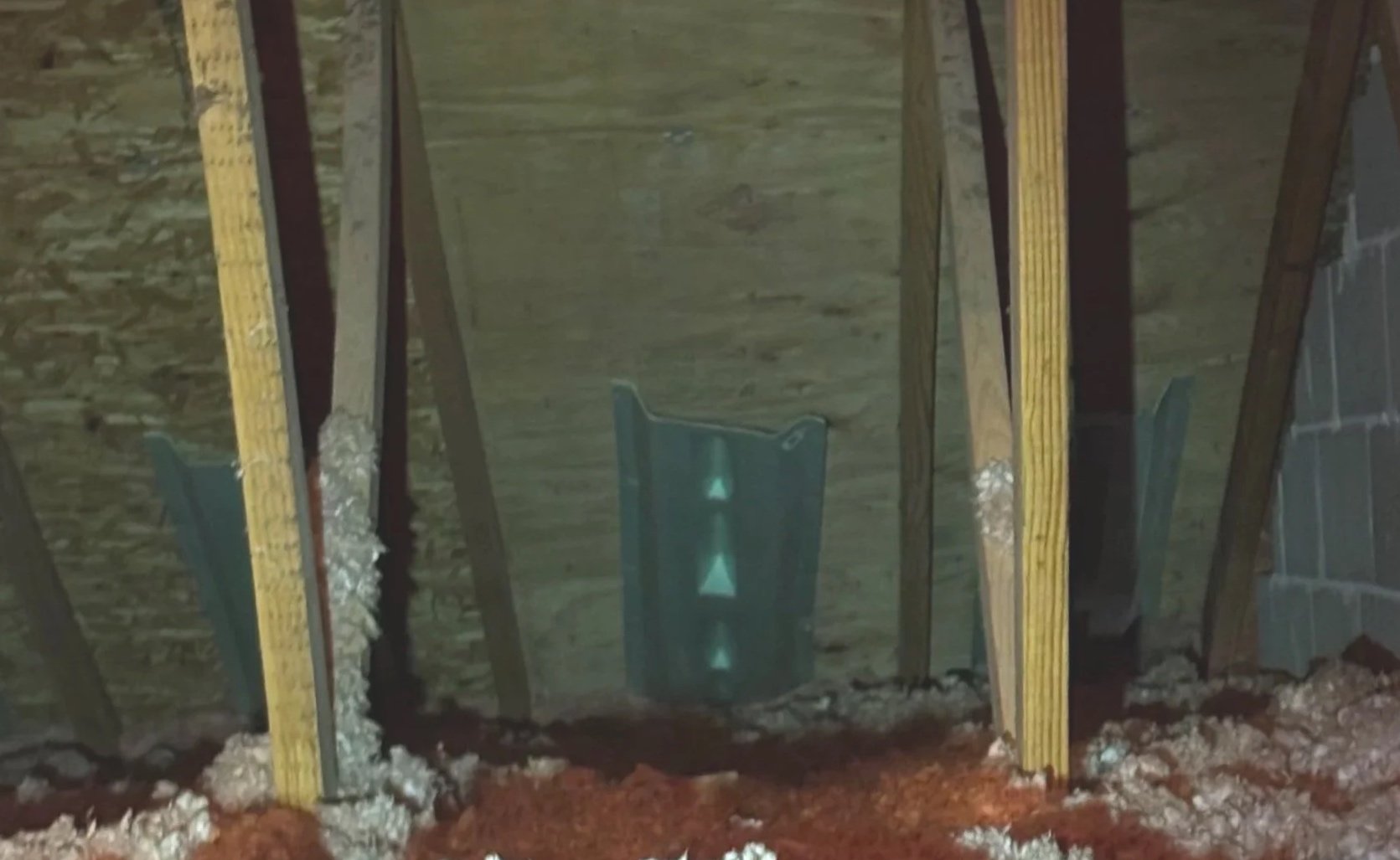
Baffles, prevents insulation from covering the soffit vents.
Vent Stack (Plumbing Vent Pipe)
The vent stack is part of the home’s plumbing system and allows gases from the drain, waste, and vent (DWV) system to be released safely through the roof. The pipe extends vertically through the attic and exits above the roofline.
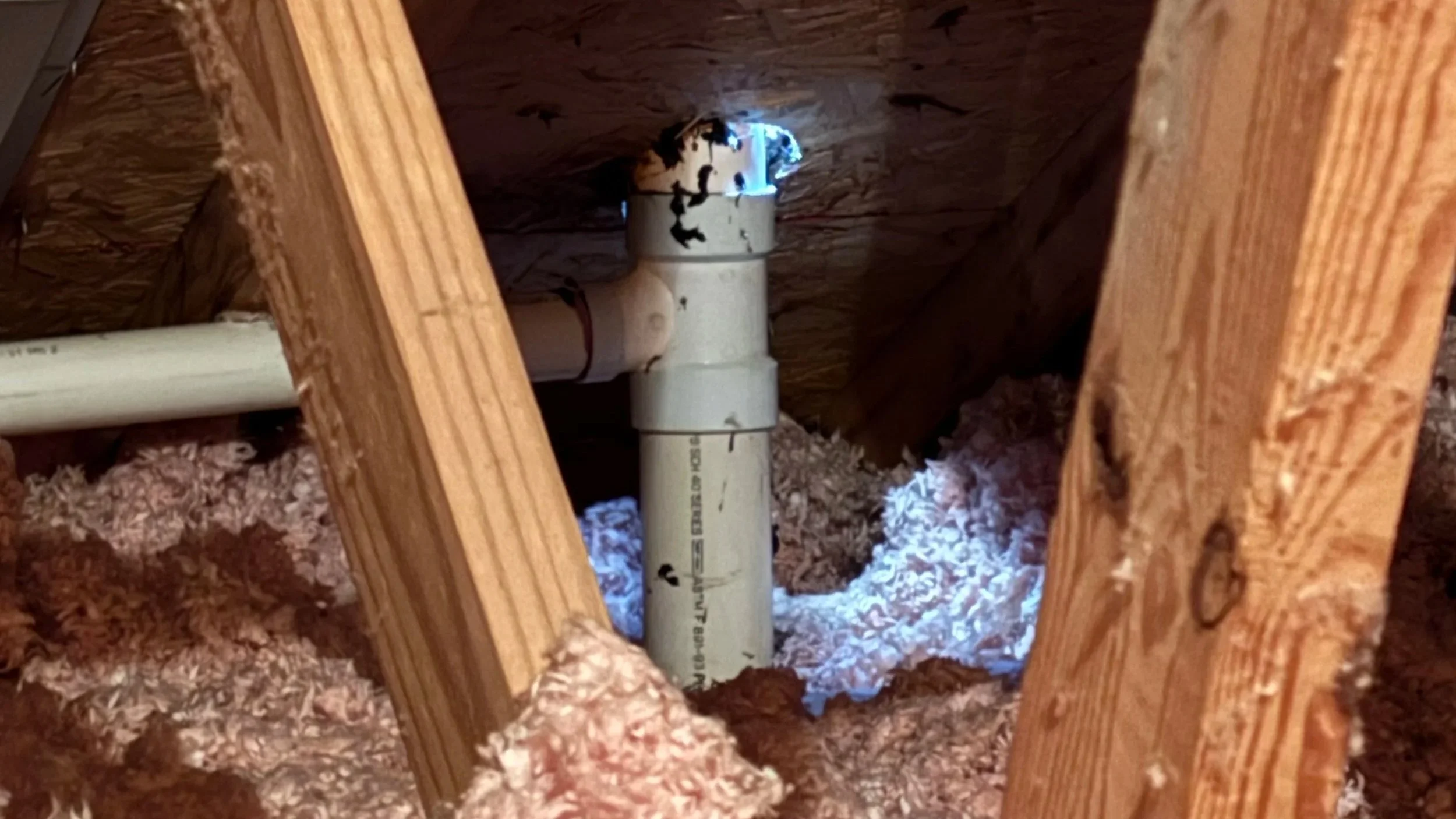
Light is observed at the vent stack penetration, suggesting a compromised seal at this location. This condition presents a potential pathway for moisture entry.
Professional Attic Evaluation
A complete attic inspection requires a trained eye to evaluate the condition, installation, and interaction of all structural and system components. A professional home inspection evaluates the attic as part of the home’s overall system, providing insight into structural performance, insulation effectiveness, and ventilation function.
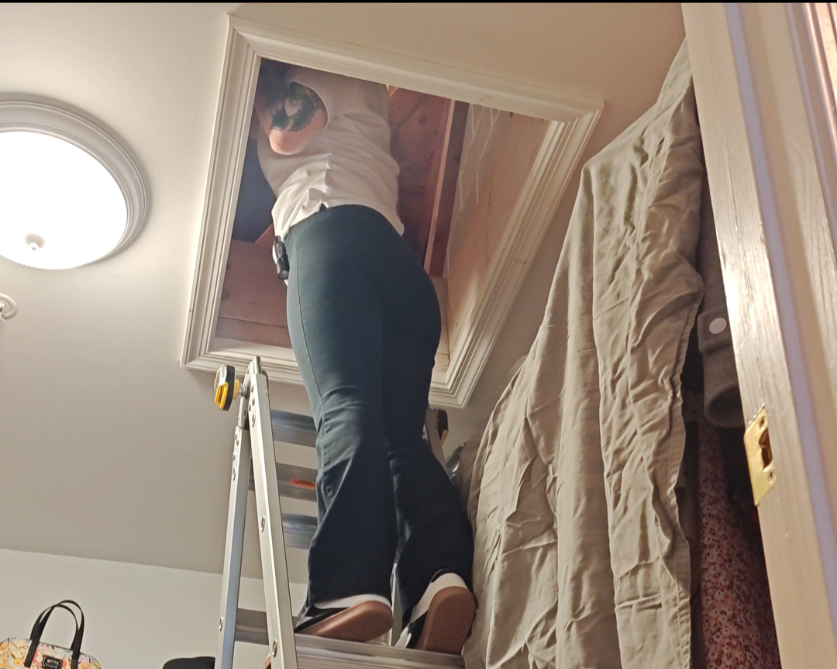
If you’re purchasing a home or want peace of mind about your current property, a professional inspection can provide valuable insight into the condition of your attic and the home as a whole.
Contact Property Inspections by KJ today to schedule your inspection.
