5 Things Homeowners Should Check Before Fall.
Back-to-School, Back-to-Home: Your House Has Homework Too.
Where did summer go? That was a fast summer break, and I cannot believe we are already heading into the next school year. For some, it has already begun. While we are checking off items from the school supply shopping list, grabbing that one pair of shoes that the kids just have to have, your house may need a few “school supplies” too.
The end of the summer is the perfect time to take a walk around your house. Your house may have spent the last few months combating heat, humidity, summer storms, open windows, heavy air conditioning use, and other everyday wear and tear. Before we get all cozy and settle into our pumpkin spice and beautiful fall color changes, here are 5 things that a homeowner could add to their back to school list.

A lined notebook with a sharpened pencil and shavings.
1. Check Your Smoke and Carbon Monoxide Alarms.
It is recommended by the U.S. Consumer Product Safety Commission to have smoke alarms on every level of the home, including inside each bedroom and outside of sleeping areas. It is also suggested to test these devices regularly and ensure batteries are replaced according to the manufacturer's recommendations.
The same is suggested for carbon monoxide alarms. The CPSC also recommends that CO alarms be placed on every level of the home and outside of sleeping areas. The most important reason being that carbon monoxide is colorless and odorless. These alarms also have a general shelf life of ten years.
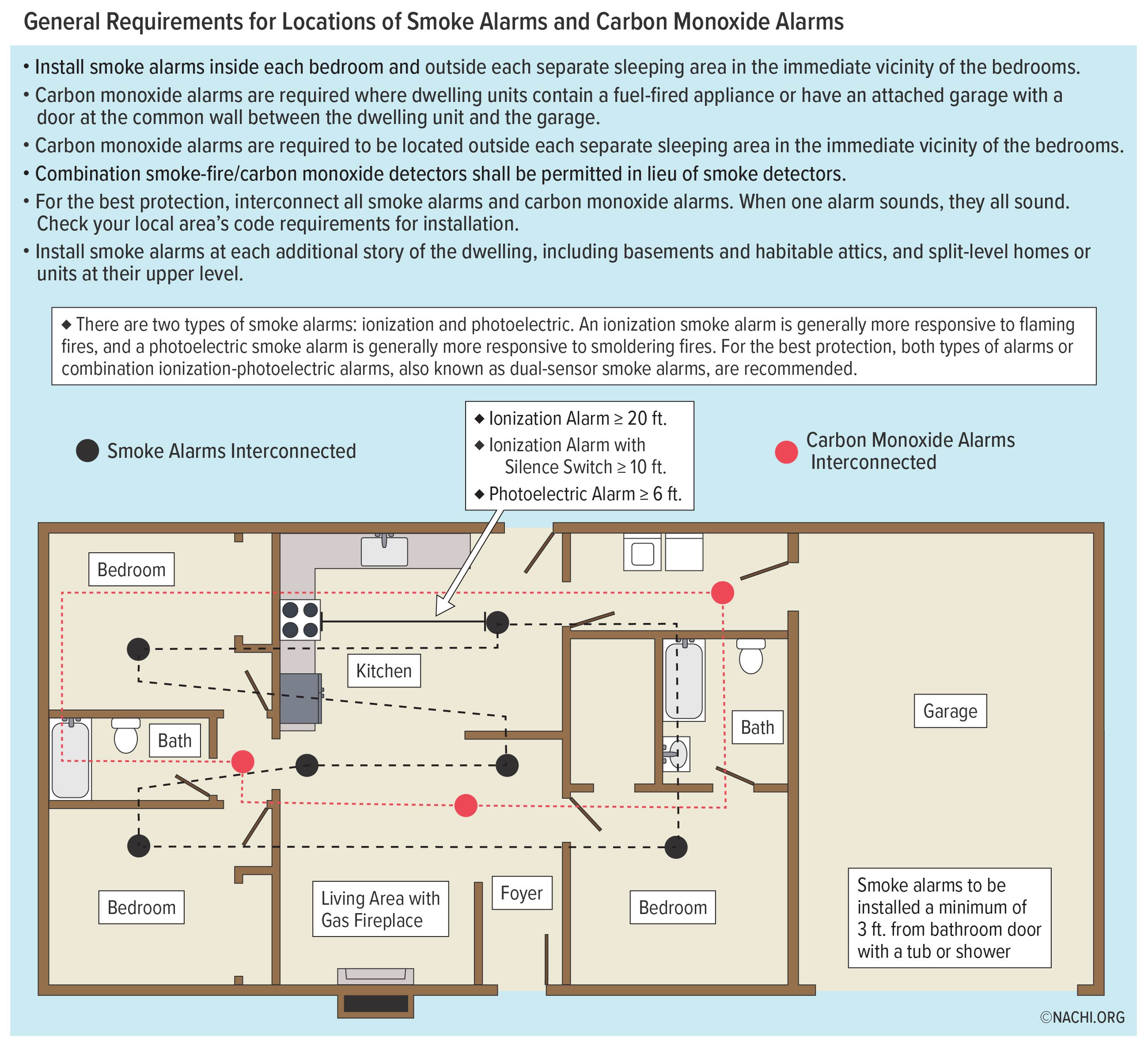
Illustration showing recommended locations for smoke alarms and carbon monoxide alarms throughout a home according to InterNACHI.
2. Take a Look at the Windows.
For some, summer may have meant that their windows were open more often than they might have been throughout the rest of the year. Now is the perfect time to check and make sure they are still operating as they should. Ensure that the locking devices on each window are working. Look for damaged screens, and check the sealant around the windows. Make note of any evidence of water staining and contact a qualified professional if you have concerns.
If you have small children, take a brief look at window safety. A window screen is designed to keep bugs out, not kids in. The CPSC specifically states that window screens are not an adequate means of preventing children from falling out of windows. The use of window guards and properly installed safety devices can help reduce the risk while still maintaining an appropriate emergency escape route. Ensure these devices do not require specific hardware to access.
Taking a few extra steps may keep your home safe and sealed.
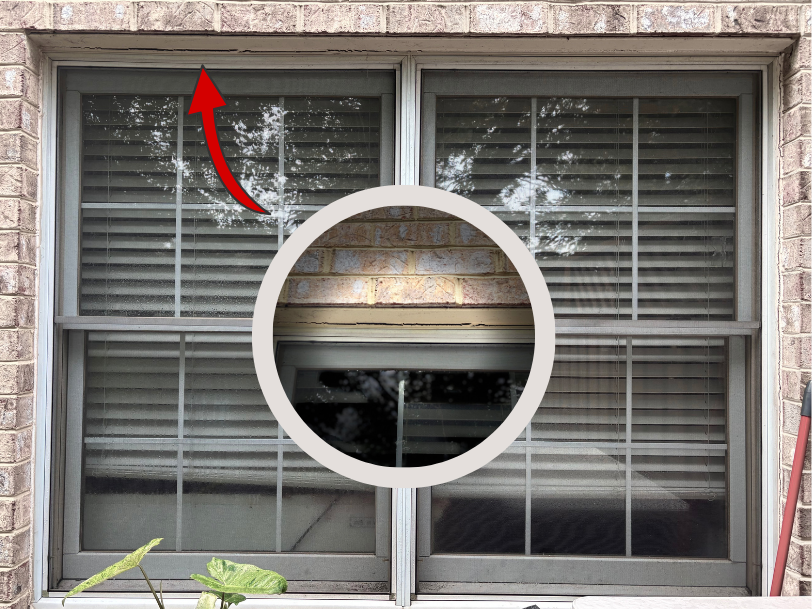
Damaged or missing sealant at the exterior window frame can allow water to enter around the window assembly.
3. Examine Your Exterior Doors.
If your house is anything like mine during the summer, the front door never stayed shut. The kids were in and out, all summer long. Once the kids go back to school, it would be the perfect opportunity to look at your exterior doors and the condition they are currently. It wouldn’t hurt to ensure that they open, close, latch, and lock properly. You can do so by checking the hinges, hardware, and strike plate to make sure that they are secure in place and working properly.
A door that does not close properly can be more than a just a minor nuisance. Doors that do not close properly can allow for unwanted pests, air, and water to enter your home. You will want to look around the door frame for signs of unwanted pests or water damage. These things might seem minuscule, but they can potentially cause big, expensive problems down the road. While you are at it, check the weatherstripping and threshold for any gaps or damage. Specifically look for light shining through any cracks. Ensure that the door isn’t sticking or rubbing when it is operated. Look over any glass, caulking, and seals around the door for cracks, gaps, or deterioration.
Catching these small issues now can help prevent bigger problems down the road.
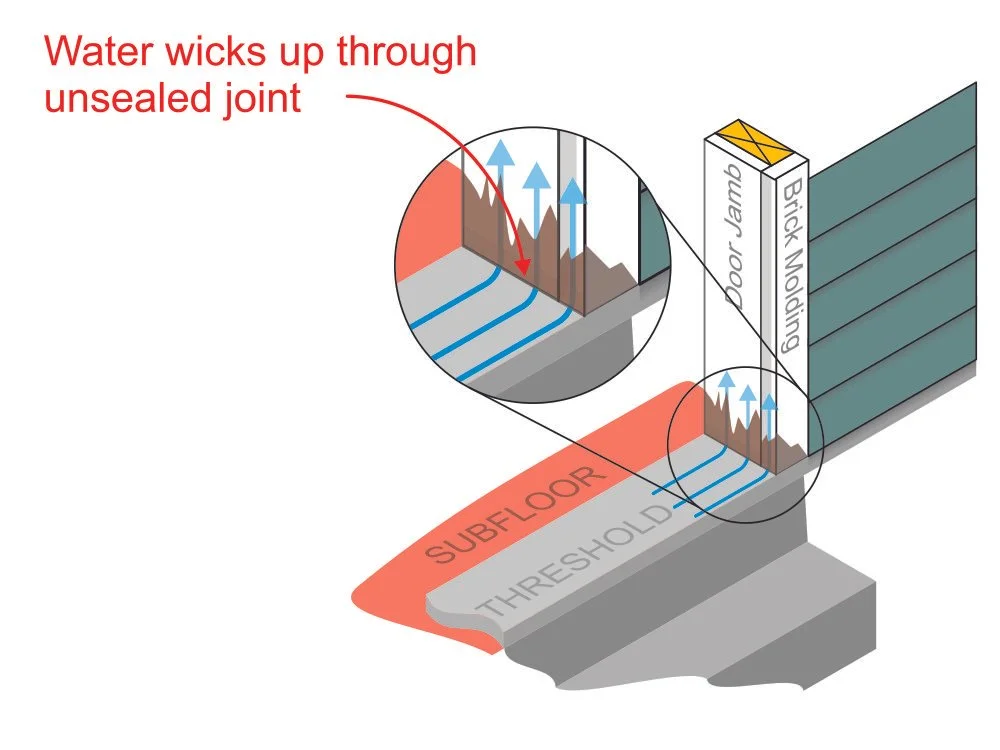
Illustration of water wicking through an unsealed joint beneath an exterior door threshold.
4. The HVAC Filter.
For many, summer means the HVAC system has most likely been running A LOT. Now is a good time to take a look at the filter. It is recommended by the EPA to replace HVAC filters according to what the manufacturer recommends. Often times, manufacturers recommend changing the filters to their appliance every 30 to 90 days. However, it is not without noting that the right time for replacement depends on your home, the filter, and how quickly it becomes dirty.
Go ahead an pull the filter out. Check for a buildup of dust and debris. If it looks dirty, it might be time for a replacement but don’t rely on the color of the filter alone, instead look for that buildup just mentioned. When you are choosing a new replacement filter, the thickest or highest rated option isn’t always the best choice. The EPA suggests using the highest rated filter your HVAC system can accommodate, as recommended by the manufacturer. If you aren't sure what your system can handle, contact an HVAC professional.
Also, make sure the replacement filter is the correct size and fits snugly without being bent or crushed. A quick check goes a long way.
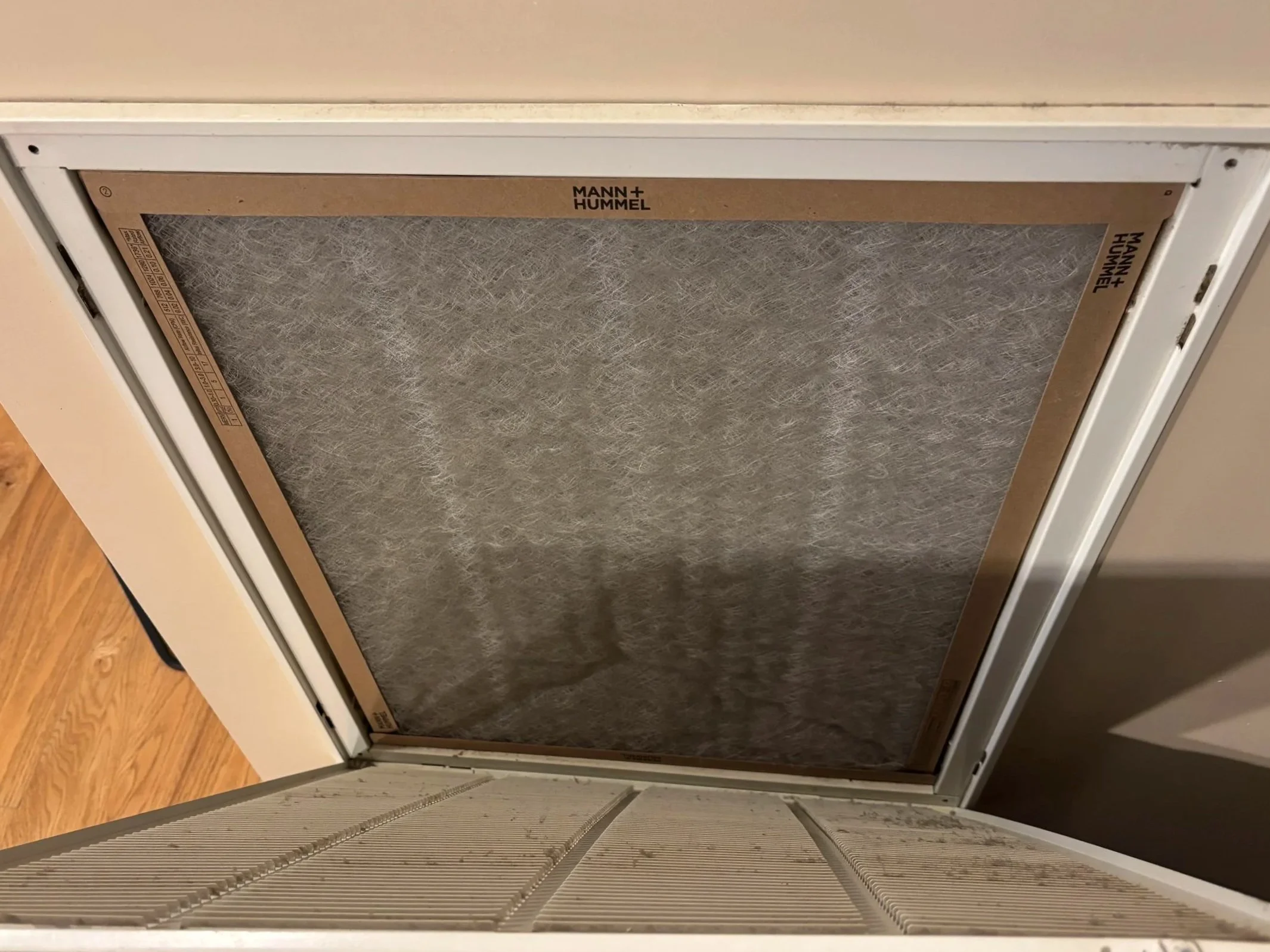
Routine HVAC filter inspection during seasonal home maintenance.
5. Evaluate Your Garage.
Many of us use our garages for storage, myself included, use their garages for storage. It isn’t used just for our vehicles, but for bikes, tools, holiday decorations, and all those extra boxes that we’ve have been meaning to sort through. The beginning of the school year is a great time to address any clutter.
Electrical panels and mechanical equipment need proper clearance to allow for servicing. Now would also be a good time to ensure that these items are not blocked by clutter. Take a look at the garage door and it’s corresponding opener, too. Make sure the door operates properly. Also, look for objects that can potentially interfere with its operation. Contact a qualified contractor to address any concerns.
It is important to note that if you have any fuel-burning equipment in or around the garage, take a few minutes to make sure it is being used and maintained properly. Fuel-burning appliances and engine-powered equipment can produce carbon monoxide, the CPSC warns. It is suggested that you never operate a generator or other fuel-burning equipment inside a garage or other enclosed space.
A little organization can go a long way, not just for ease but for safety too.
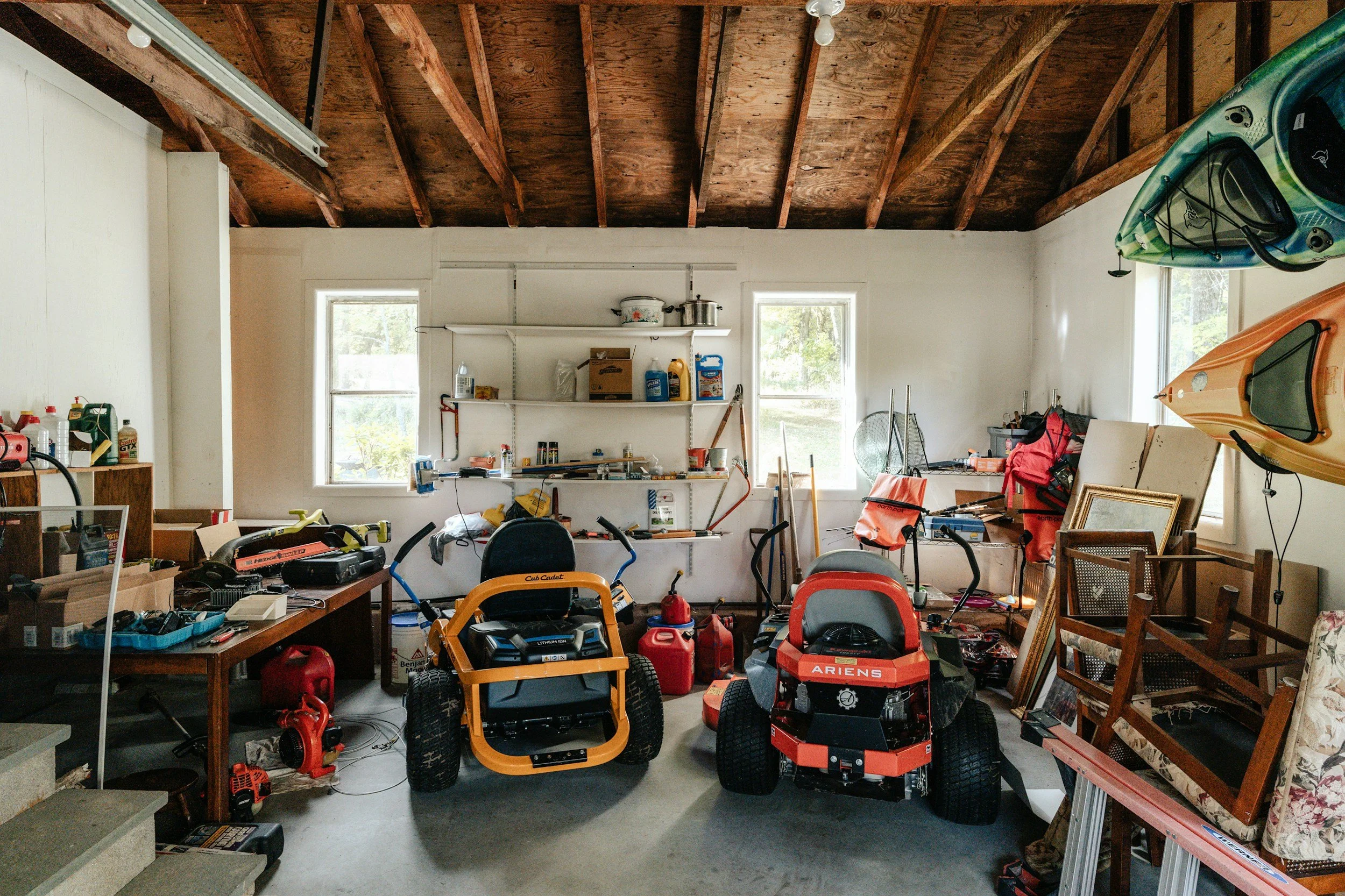
A well-used garage with lawn equipment, tools, and stored belongings.
The goal isn't to make your home perfect. The goal is to catch the small things before they have an opportunity to become the BIG things.
Because while everyone else is getting ready for a new school year, your house deserves a little preparation too.

A well-maintained two-story home with a covered front porch, landscaped yard, and a mix of stone and shingle exterior siding.
Verified Sources & References
U.S. Consumer Product Safety Commission — Childproofing Your Home
Information on smoke alarms, carbon monoxide alarms, window guards, window screens, outlet protection, and other common home safety concerns.
CPSC — Childproofing Your Home
U.S. Consumer Product Safety Commission — Carbon Monoxide Fact Sheet
Information about carbon monoxide hazards, CO alarms, fuel-burning appliances, and safe use of generators and other equipment.
CPSC — Carbon Monoxide Fact Sheet
U.S. Consumer Product Safety Commission — CO Alarms
Recommendations for CO alarm placement, testing, and battery replacement.
U.S. Environmental Protection Agency — Guide to Air Cleaners in the Home
Information about furnace and HVAC filters, filter sizing, replacement intervals, and selecting an appropriate filter for an HVAC system.
EPA — Guide to Air Cleaners in the Home
U.S. Department of Energy — Building Science Education: Foundation Drain, Gutters & Downspouts
Information about managing roof runoff, gutters, downspouts, and protecting foundations from excessive moisture.
U.S. Department of Energy — Foundation Drain, Gutters & Downspouts
