Why Every Modern Home Needs a Water Heater Expansion Tank.
Does Your Water Heater Have One?
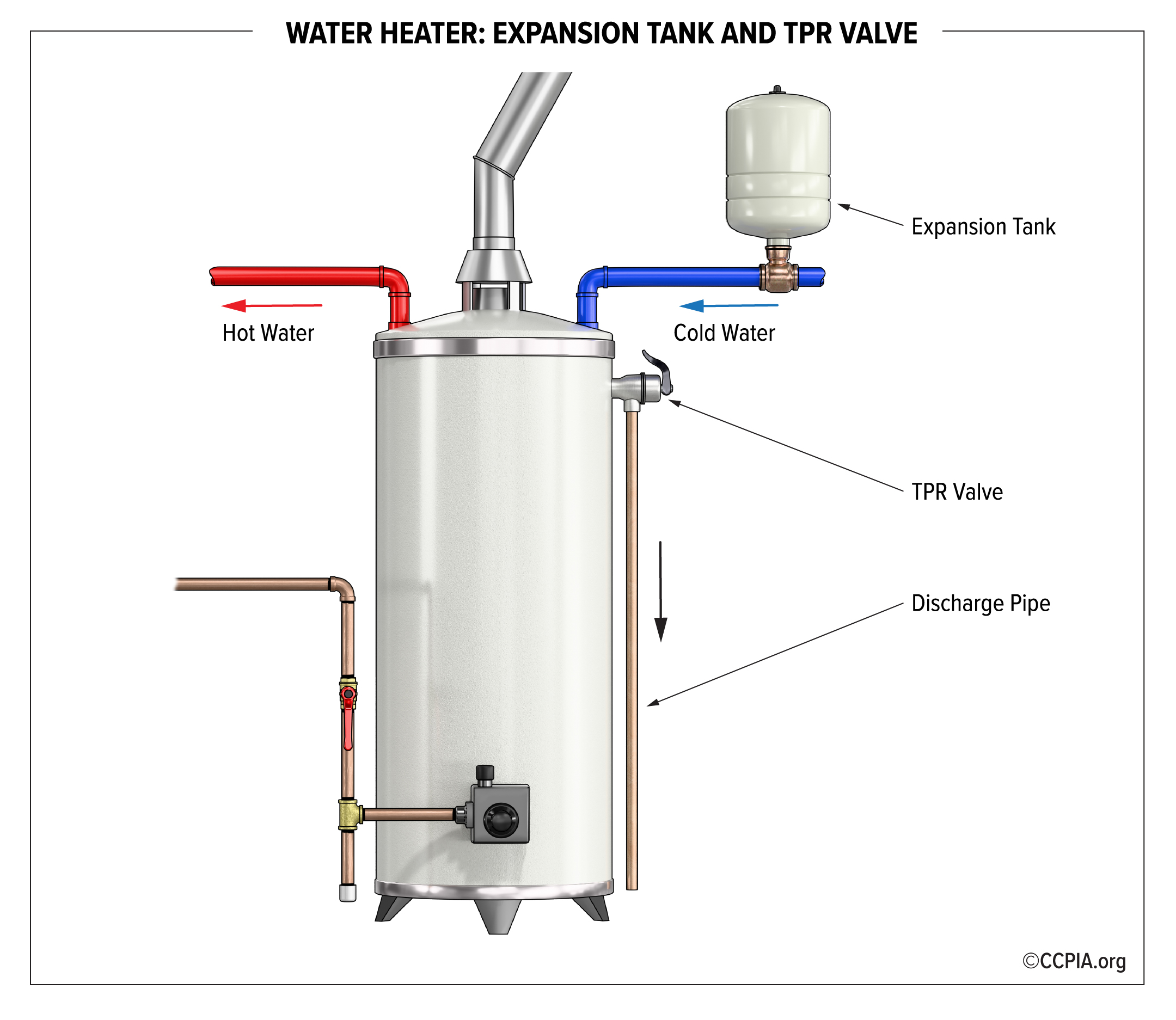
Often times, you might notice a small metal tank attached to the cold inlet on your water heater - usually blue, gray, or white. That small container is a thermal expansion tank, and while it may look like just another component of your plumbing system, it plays a very important role in keeping your home’s system safe.
Today, I am going to briefly break down what an expansion tank does and why they are required by national building codes.
So What Does an Expansion Tank Do?
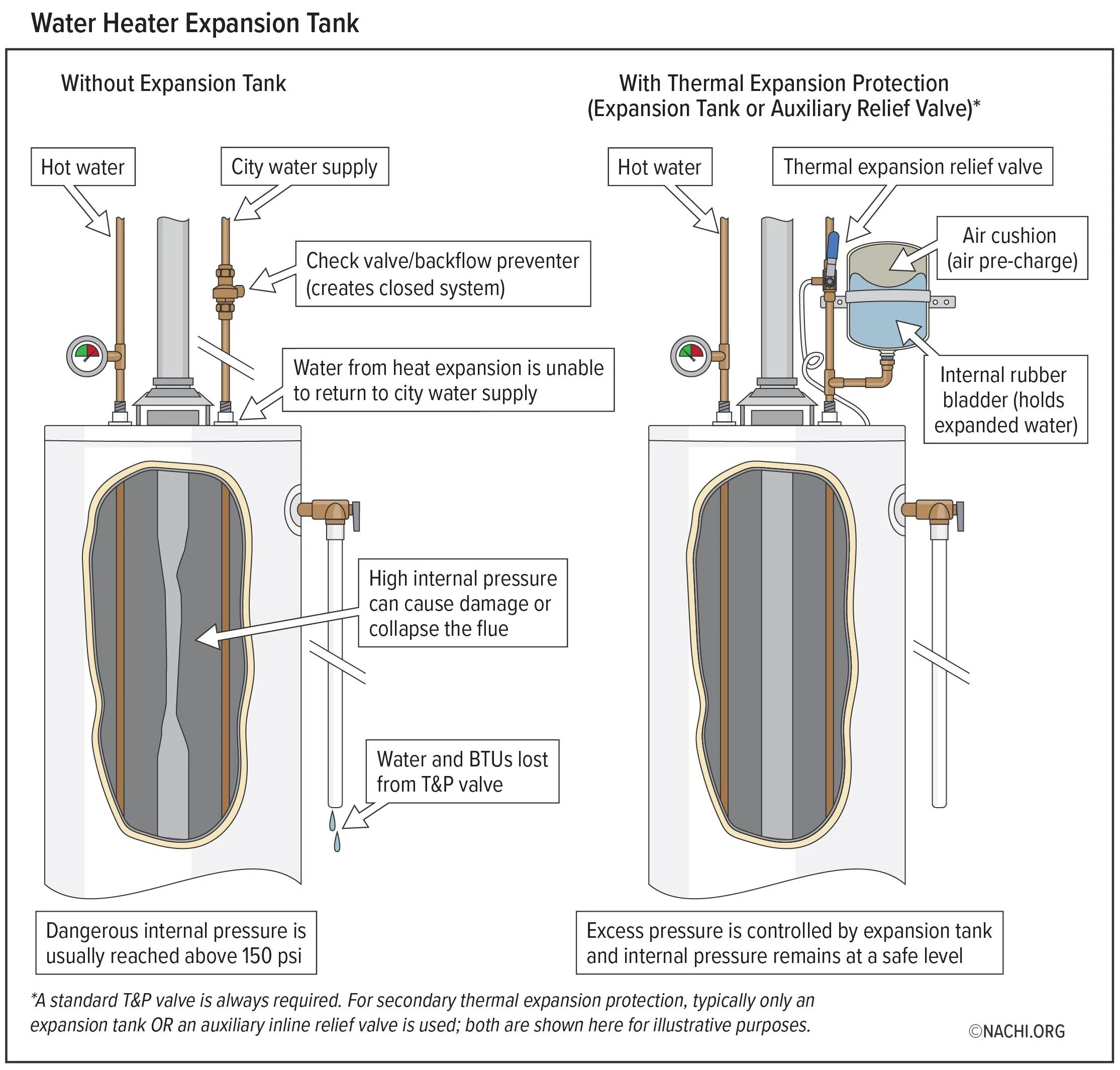
When cold water heats up inside of a water heater, it will expand in volume. This is a process called thermal expansion. Since water is incompressible, that extra volume has no where to go, causing intense pressure inside a plumbing system. An expansion tank helps to alleviate this issue through a simple design:
Absorbs the trapped water: he left side of the diagram shows a check valve or backflow preventer. This blocks water from returning to the city water supply, creating a closed system.
Prevents catastrophic pressure levels: Without a tank, the internal system pressure can rise above 150 psi. This can strain your pipes to the breaking point, alongside causing other issues.
Saves energy and stops leaks: Instead of forcing water and energy (BTUs) to leak out of the T&P (Temperature and Pressure) valve, the expansion tank can capture that excess volume safely.
Separates air and water: The right side of the diagram highlights an internal rubber bladder that catches the expanding water, keeping it entirely separate from a compressed air cushion (air pre-charge).
Maintains safe system limits: Because the air cushion can be compressed while the water cannot, the rubber bladder expands into the air zone. This ensures the excess pressure is controlled and remains at a safe level.
When Do Expansion Tanks Become Mandatory?
Model plumbing codes, such as the International Plumbing Code, mandate that an expansion tank is connected to your plumbing system whenever it is classified as a closed system. Modern plumbing standards suggest municipal water supplies are to be protected from potential contamination, or backflow.
To prevent this backflow, water utility comanies may install one-way valves one the main supply line that enters the home. These valves - backflow preventer, pressure reducing valve (PRV), or check valves - protect the water supply. They also turn your modern home into a closed system, leaving high pressure trapped in your pipes.
In an effort to reduce this pressure risk, building standards require thermal expansion controls:
International Residential Code (IRC Section P2903.4): Mandates an approved thermal expansion control device on any closed water system.
International Plumbing Code (IPC Section 607.3): Requires a thermal expansion control device downstream of any backflow preventer, check valve, or pressure-reducing valve.
Local Plumbing Standards in Maryland:
While model codes do provide standard guidelines, all enforcement and permits are handled on a local level. It is critical to always check with your local building department to ensure your installation meets all local legal requirements.
Inspection Findings in a Closed System:
To see how these rules actually play out in real life, take a look at this utility room set up with a power-vented gas water heater connected to a hydro-air heating system.
An Aging Water Heater Tank
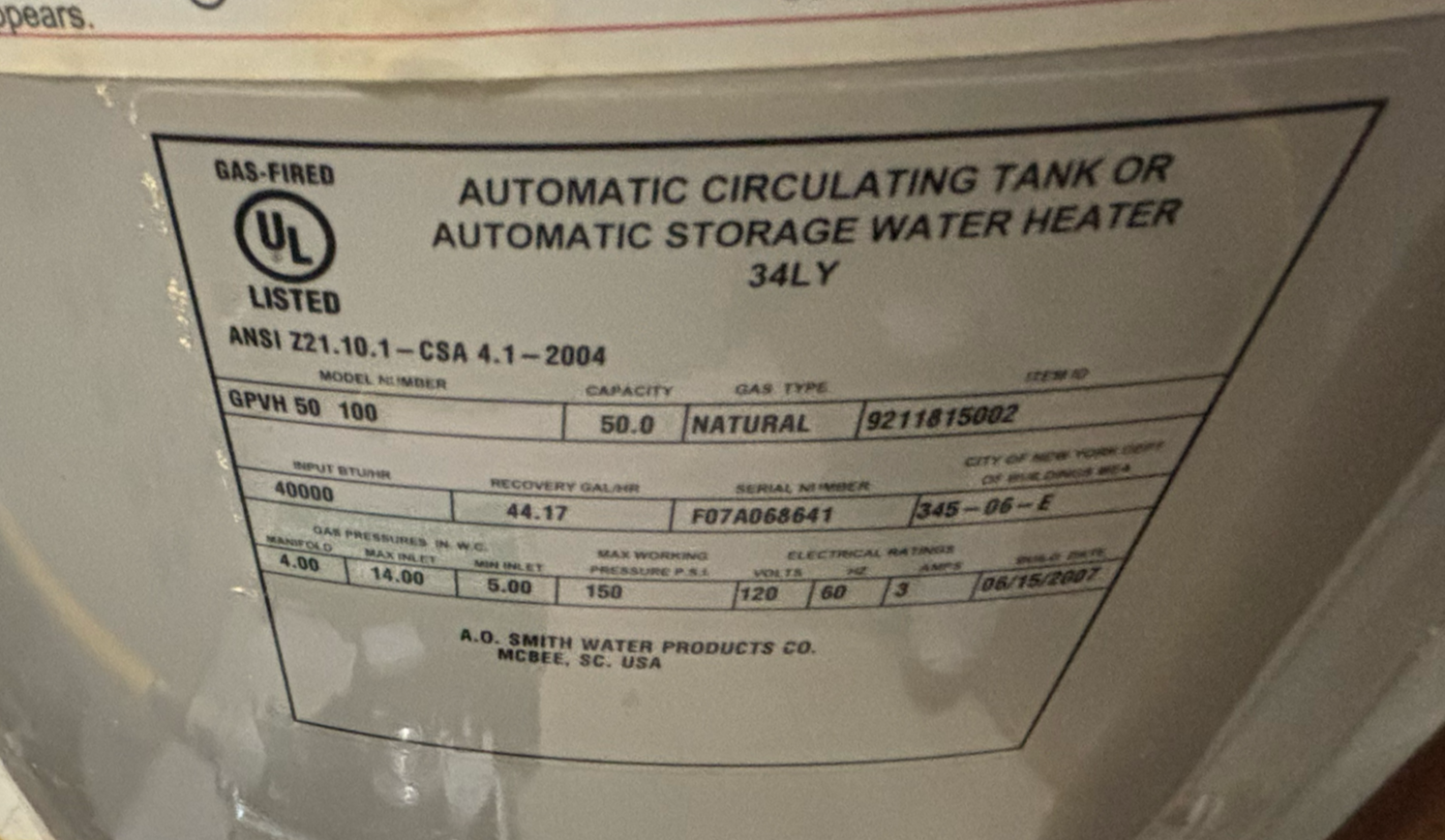
The data tag on this water heater shows a manufacture date from the year 2007. That means this unit is 19 years old. Standard water heaters are expected to last 10 - 14 years (depending on the type).
Missing Thermal Expansion Tank:
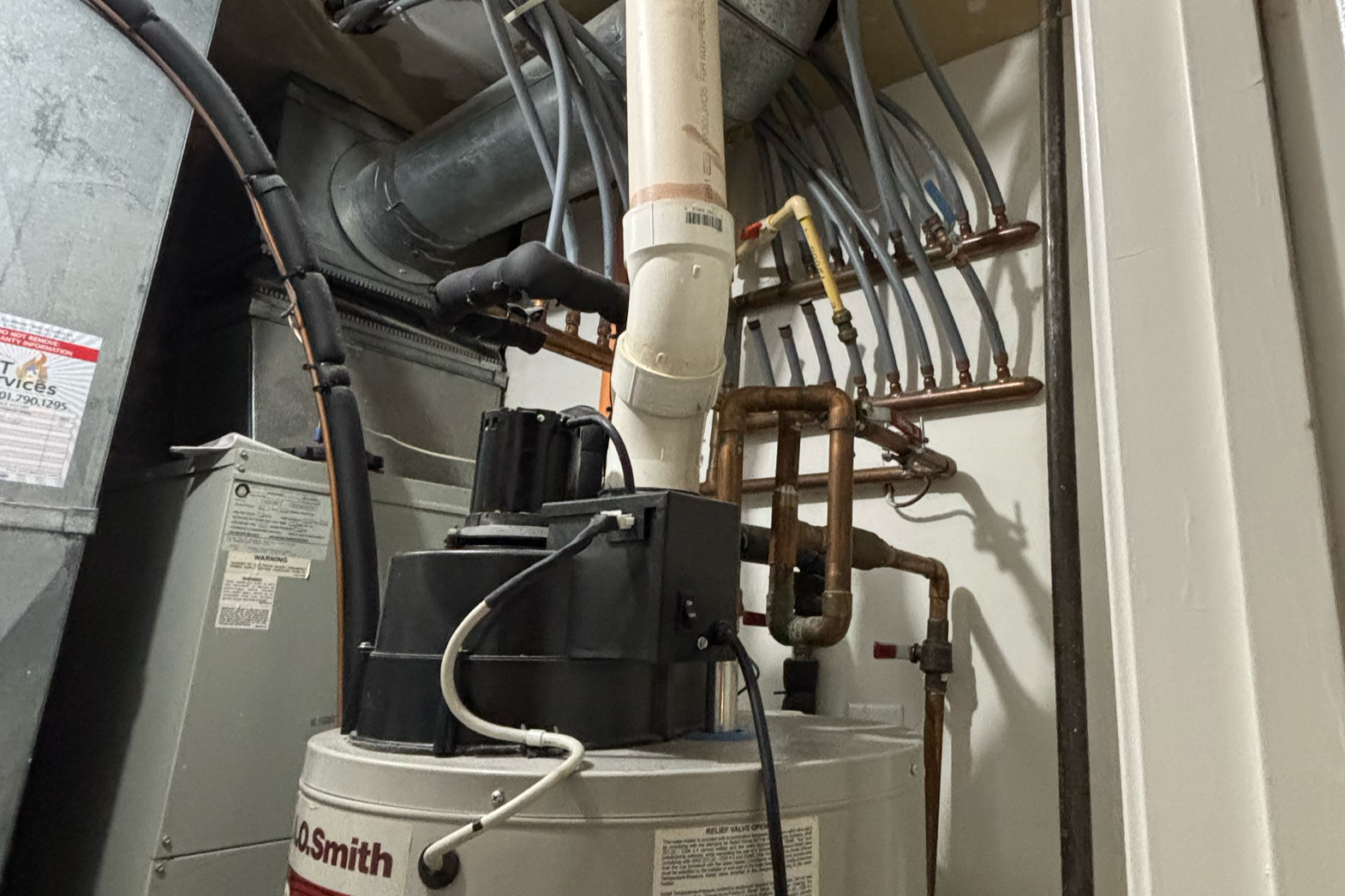
Looking at the picture below, you can see a complex manifold water distribution setup. It supplies cold and hot water to domestic taps, appliances, and even the Apollo heating system (a hydronic heating sytem). The problem? There is no expansion tank present. Every time this water heater decides to fire up, the heat expands with no where to escape to.
Deteriorating One-Way Valve:
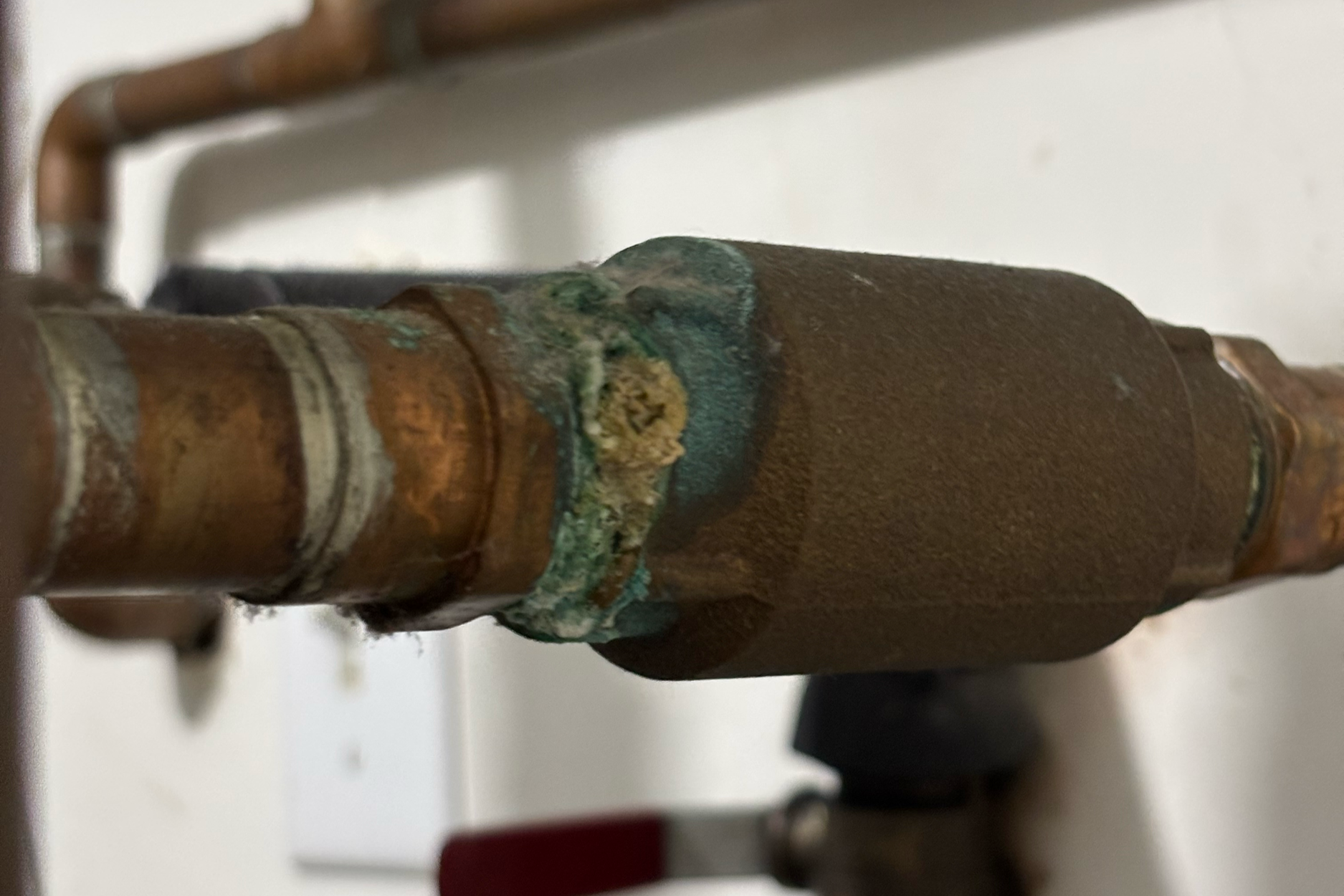
The close-up picture below shows an inline check valve with heavy green oxidation, known as patina. You may notice a crusty. This valve aids in the prevention of water back flowing into the main water line. Without the help of an expansion tank, this valve is repeatedly impacted by thermal expansion spikes. The patina you see could very well be the result.
The T&P Relief Valve.
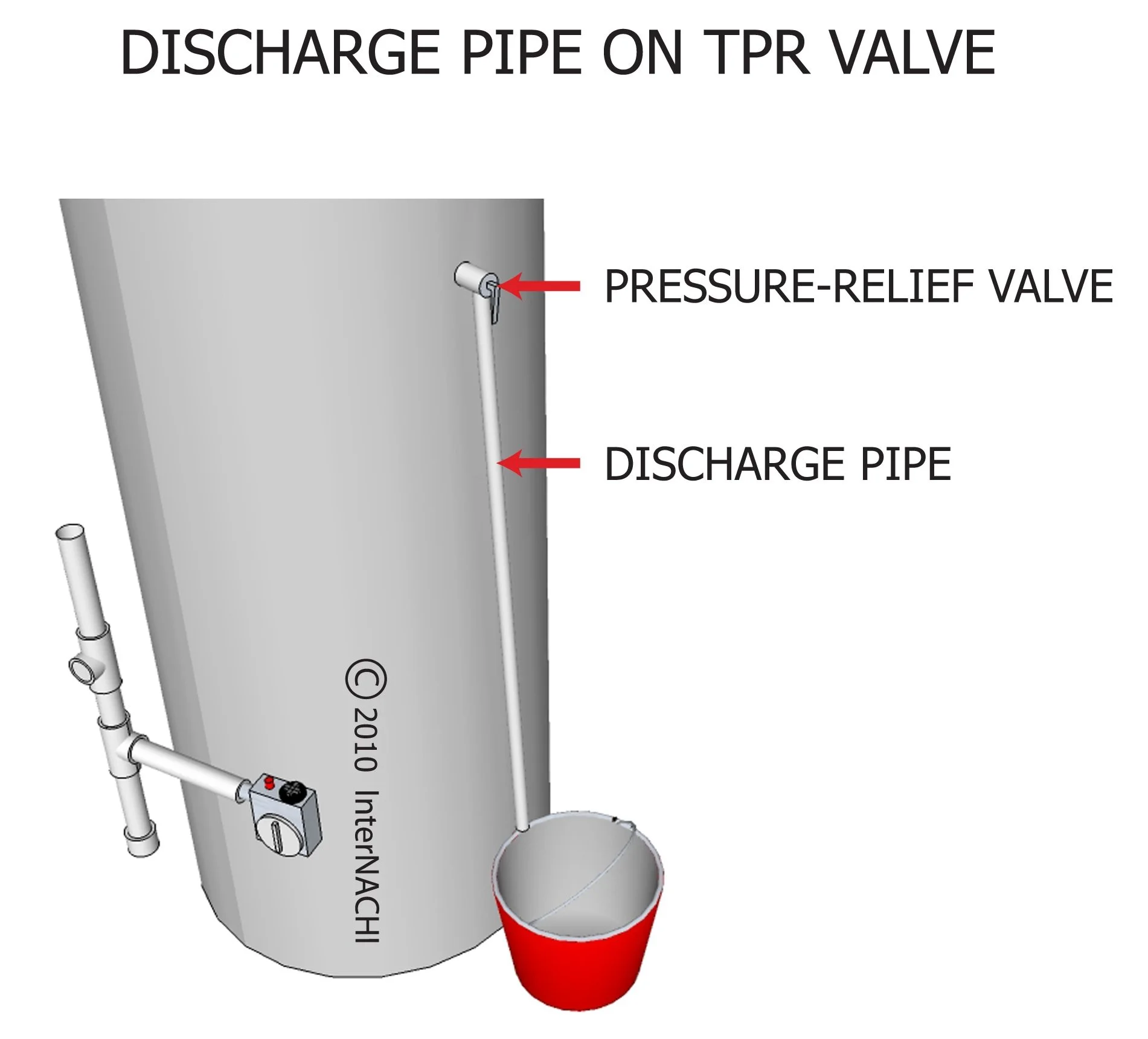
It is not uncommon for homeowners to assume they are safe from thermal expansion spikes due to the presence of the Temperature and Pressure relief Valve. This is a safety mechanism, but it is not designed for daily use. It is designed for emergency situations to prevent over-pressurization.
The Takeaway for Homeowners in Maryland?
A thermal expansion tank might seem like an optional add-on to your water heating system. However, it is not. It plays a critical role in preventing potential costly plumbing disasters and catastrophic failures
References:
International Code Council. (2020). 2021 International Plumbing Code (Section 607.3). International Code Council.
International Code Council. (2020). 2021 International Residential Code for One- and Two-Family Dwellings (Section P2903.4). International Code Council.
Disclaimer:
This article is provided strictly for educational and informational purposes. Plumbing codes, building regulations, and local permit requirements vary by jurisdiction and are subject to change. The information contained in this post does not constitute professional engineering, plumbing, or legal advice. Always consult a licensed plumber and check with your local municipal or county building authority before undertaking any plumbing installations, repairs, or water heater replacements.
